Blueprint Printing Paper Size Guide
Your complete reference for blueprint paper sizes, construction drawing paper types, and architectural plan printing. Find the right paper size and stock for your AEC projects.
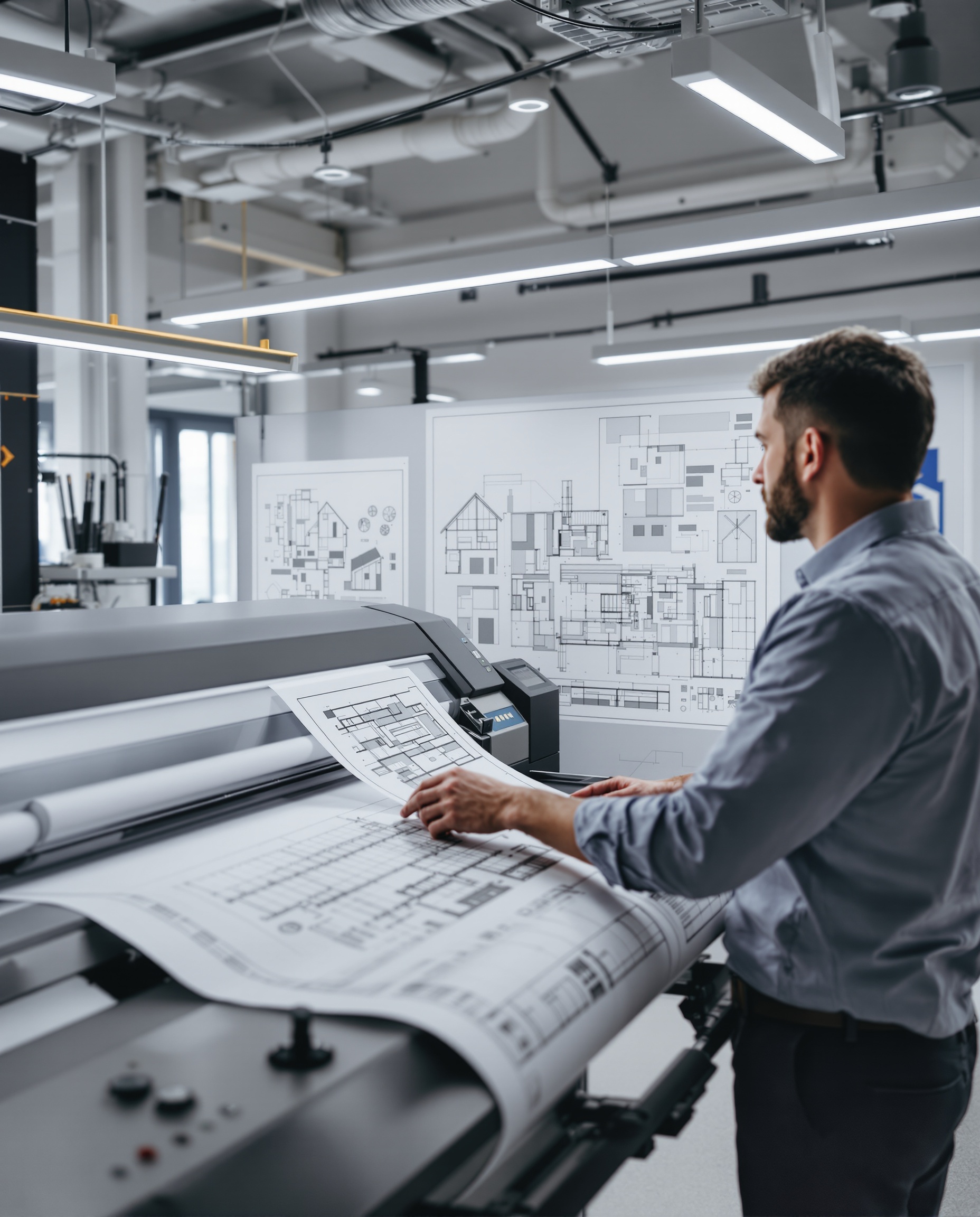
Construction Blueprint Sizes Explained
Choosing the correct blueprint paper size is essential for architects, engineers, contractors, and design professionals. Whether you're printing construction drawings, architectural plans, or engineering blueprints, this comprehensive guide covers everything you need to know about paper sizes, paper types, and finishing options for professional printing. The tables below reflect the exact paper options available through our printing service, and will receive updates when new types and sizes are available.

Blueprint Printing Paper Size Guide
Available Blueprint Sizes
All paper sizes currently available for blueprint and large format printing. Dimensions shown in both inches and square footage for easy reference.
| Size Name | Dimensions | Width (in) | Height (in) | Area (sq ft) |
|---|---|---|---|---|
| Letter | 8.5" x 11" | 8.50 | 11.00 | 0.6493 |
| Legal | 8.5" x 14" | 8.50 | 14.00 | 0.8264 |
| Tabloid | 11" x 17" | 11.00 | 17.00 | 1.2986 |
| A4 | 210 x 297mm | 8.27 | 11.69 | 0.6712 |
| A3 | 297 x 420mm | 11.69 | 16.54 | 1.3424 |
| A2 | 420 x 594mm | 16.54 | 23.39 | 2.6861 |
| A1 | 594 x 841mm | 23.39 | 33.11 | 5.3794 |
| A0 | 841 x 1189mm | 33.11 | 46.81 | 10.7639 |
| ARCH D | 24" x 36" | 24.00 | 36.00 | 6.0000 |
| ARCH E | 36" x 48" | 36.00 | 48.00 | 12.0000 |
| ARCH E1 | 30" x 42" | 30.00 | 42.00 | 8.7500 |
Size Selection Guide by Project Type
Residential Projects
ARCH C (18x24) or ARCH D (24x36) - Ideal for floor plans, elevations, and detail sheets for homes and small buildings
Commercial Projects
ARCH D (24x36) or ARCH E (36x48) - Accommodates complex systems and larger floor plates typical of commercial buildings
Site & Civil Plans
ARCH E (36x48) or larger custom sizes - Required for site plans, grading plans, and utility layouts at readable scales
Field Reference Sets
ANSI B (11x17) half-size - Portable, fits in standard trucks, readable at 50% reduction of full-size drawings
Permit Submittals
ARCH D (24x36) - Most commonly required size by building departments; check local requirements
International Projects
ISO A1 (594x841mm) - Standard for international collaborations and overseas project documentation
Available Paper Types
Paper stocks currently available for blueprint printing. Paper weight is measured in pounds (lb) or grams per square meter (GSM).
| Paper Type | Weight | Description |
|---|---|---|
| Standard Bond - 20lb | 20lb | Standard white bond paper for everyday printing |
| Premium Bond - 24lb | 24lb | Premium white bond paper with enhanced durability |
| Choice Paper - 60lb | 68lb | Choice thick paper with book like thickness, with matte and glossy finish paper for vibrant colors |
| Text Matte - 80lb | 80lb | Matte finish paper for high-quality prints |
| Cardstock - 110lb | 100lb | Heavy cardstock for durable prints |
Paper Selection by Use Case
Field & Job Site Use
20lb Bond or Tyvek - Water-resistant, durable, handles rough handling and outdoor conditions
Client Presentations
24-32lb Coated Paper - Professional appearance, vivid colors, smooth finish for impressive presentations
Review & Markup Copies
20lb Bond - Cost-effective, accepts pencil/pen markups, easy to recycle after use
Archival & Record Sets
Vellum or Mylar - Long-term durability, fade-resistant, meets archival standards
Bid Documents & Submittals
24lb Bond - Professional quality, durable enough for multiple reviews, standard for specifications
Large Format Posters
Photo Satin or Gloss - High color accuracy, professional finish for marketing displays
Available Color Options
Color modes available for your prints. Black & white is recommended for permit sets and field copies, while color is ideal for presentations and renderings.
| Color Mode | Description |
|---|---|
| Black Line | Black and white line drawings and text |
| Color Line | Color line drawings with limited color coverage |
| Full Color/Graphics | Full color prints with graphics and images |
Frequently Asked Questions About Blueprint Sizes
Common questions about blueprint paper sizes, printing, and specifications
- What is the most common blueprint size?
- The most common blueprint size for construction and architectural drawings is ARCH D (24" x 36"). This size is widely accepted by building departments for permit submittals and provides a good balance between readability and portability. For residential projects, ARCH C (18" x 24") is also popular, while larger commercial projects often use ARCH E (36" x 48").
- What size paper are blueprints printed on?
- Blueprints are typically printed on ARCH (Architectural) or ANSI (Engineering) standard paper sizes. The most common sizes include ARCH D (24" x 36") for full-size construction documents, ANSI B (11" x 17") for half-size field sets, and ARCH E (36" x 48") for large site plans. The specific size depends on the scale of the drawings and the requirements of the permitting authority.
- What paper size do contractors use for construction drawings?
- Contractors typically use ARCH D (24" x 36") for full-size construction drawings on the job site. However, many contractors prefer half-size prints on ANSI B (11" x 17") paper for daily reference because they're easier to carry, fit in truck cabs, and can be stored in standard binders. Half-size prints are still readable for most construction purposes.
- What size blueprints are required for building permits?
- Most building departments require ARCH D (24" x 36") for permit submittals, though requirements vary by jurisdiction. Some municipalities accept ARCH C (18" x 24") for residential projects, while larger commercial projects may require ARCH E (36" x 48"). Always check with your local building department for specific size requirements before submitting permit applications.
- What size are construction drawings typically printed at?
- Construction drawings are typically printed at ARCH D (24" x 36") for full-size sets. The standard scales used are 1/4" = 1'-0" for floor plans and 1/8" = 1'-0" for site plans at this size. For half-size prints (ANSI B, 11" x 17"), the effective scale is reduced by 50%, making 1/4" = 1'-0" drawings appear at 1/8" = 1'-0" scale.
- What is the difference between ANSI and ARCH paper sizes?
- ANSI sizes are engineering standards based on the 8.5" x 11" letter format, with each size being twice the area of the previous size (A, B, C, D, E). ARCH sizes are architectural standards with different proportions (9" x 12" base) designed specifically for architectural drawings. ARCH D (24" x 36") is more commonly used for building construction, while ANSI D (22" x 34") is typical for mechanical and civil engineering drawings.
- What paper weight should I use for blueprints?
- For everyday construction drawings and field copies, 20lb bond paper is the most cost-effective choice. For permit submittals and documents that will be handled frequently, 24lb bond provides better durability. For archival purposes or drawings that need to last many years, consider vellum or mylar. Coated papers (32lb+) are best for presentations and color renderings.
- Can I print blueprints in color or only black and white?
- Blueprints can be printed in either black and white or full color. Black and white printing is standard for permit submittals and construction documents, and is more cost-effective for large quantities. Color printing is recommended for presentations, renderings, and drawings that contain color-coded information such as MEP systems, phasing diagrams, or material callouts.
Get Your Blueprints Printed Today
Upload your drawings and get instant pricing on professional blueprint printing. Fast turnaround, nationwide delivery.